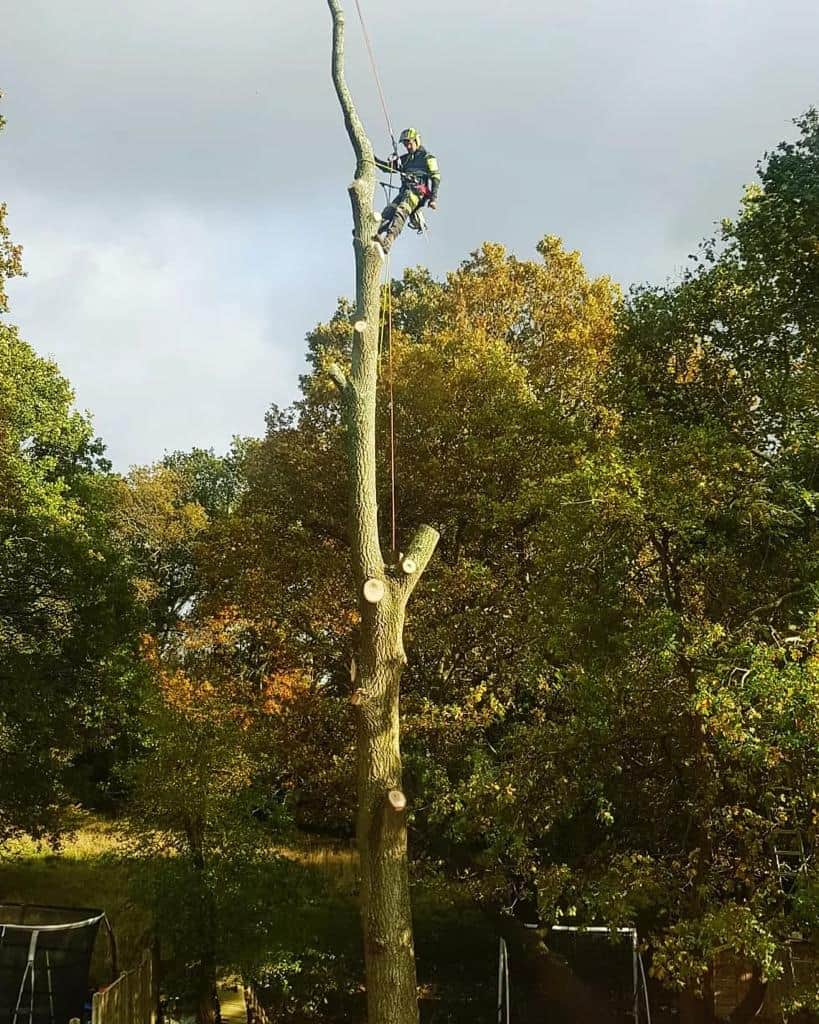
Managing crown density is an essential part of responsible tree care. In Southampton, Hampshire, many mature trees grow in close proximity to homes, gardens and neighbouring boundaries, making careful canopy management important for both safety and appearance. However, reducing crown density must always be carried out with precision to avoid over-pruning and long-term harm to the tree.
At LM Tree Surgery Southampton, crown management is approached with a clear understanding of tree structure, growth patterns and long-term health.
What crown density means
Crown density refers to the thickness of foliage and branches within the tree’s canopy. A dense crown can limit light penetration, restrict airflow and increase wind resistance. While some density is natural and beneficial, excessive growth may create structural stress or shading concerns in residential settings.
Managing density does not mean drastically reducing the tree’s size. Instead, it involves selectively removing specific branches to improve balance and performance.
The risks of over-pruning
Over-pruning is one of the most common mistakes in DIY tree work. Removing too much foliage at once can:
- Disrupt the tree’s ability to produce energy through photosynthesis
- Trigger excessive stress responses
- Encourage weak, rapid regrowth
- Leave the tree more vulnerable to disease and decay
A tree that has been heavily reduced may initially appear tidy, but over time it can become structurally weaker and less stable.
Selective thinning for balanced results
Professional crown thinning focuses on removing smaller, carefully chosen branches throughout the canopy. This improves airflow and light penetration without dramatically altering the tree’s natural shape.
By maintaining the overall structure while reducing internal congestion, the tree remains healthy and visually balanced.
Preserving structural integrity
Every branch plays a role in supporting the canopy. Removing too many structural limbs can alter weight distribution and create new stress points.
Managing crown density correctly involves understanding which branches can be safely removed without compromising the tree’s framework. This ensures stability is maintained rather than weakened.
Improving wind resistance without loss of vitality
A dense canopy can act like a sail during strong winds, placing pressure on the trunk and root system. Carefully reducing density allows wind to pass more freely through the canopy, lowering strain during adverse weather.
This approach reduces mechanical stress while keeping enough foliage for healthy growth and energy production.
Enhancing light and garden usability
In residential gardens across Southampton, dense canopies can limit natural light to lawns, patios and neighbouring areas. Sensitive crown management improves light distribution without drastically altering the tree’s silhouette.
This provides practical benefits for the garden while respecting the tree’s long-term health.
Supporting long-term growth and stability
When carried out properly, crown density management supports sustainable growth. The tree remains structurally sound, with balanced development that reduces the likelihood of branch failure or progressive stress.
Regular, measured intervention is far more effective than occasional heavy cutting.
Conclusion
Managing crown density without over-pruning requires skill, planning and a clear understanding of tree biology. By selectively thinning rather than excessively cutting, trees can remain healthy, stable and visually appealing while reducing wind resistance and shading concerns.
LM Tree Surgery Southampton provides professional crown management services across Southampton, Hampshire, helping homeowners maintain safe and well-balanced trees. For those looking to improve canopy structure without compromising tree health, expert tree surgery offers a safe and responsible solution.
Call us on: 023 8235 3287
Click here to find out more about LM Tree Surgery Portsmouth
Click here to complete our contact form and see how we can help with your tree needs.