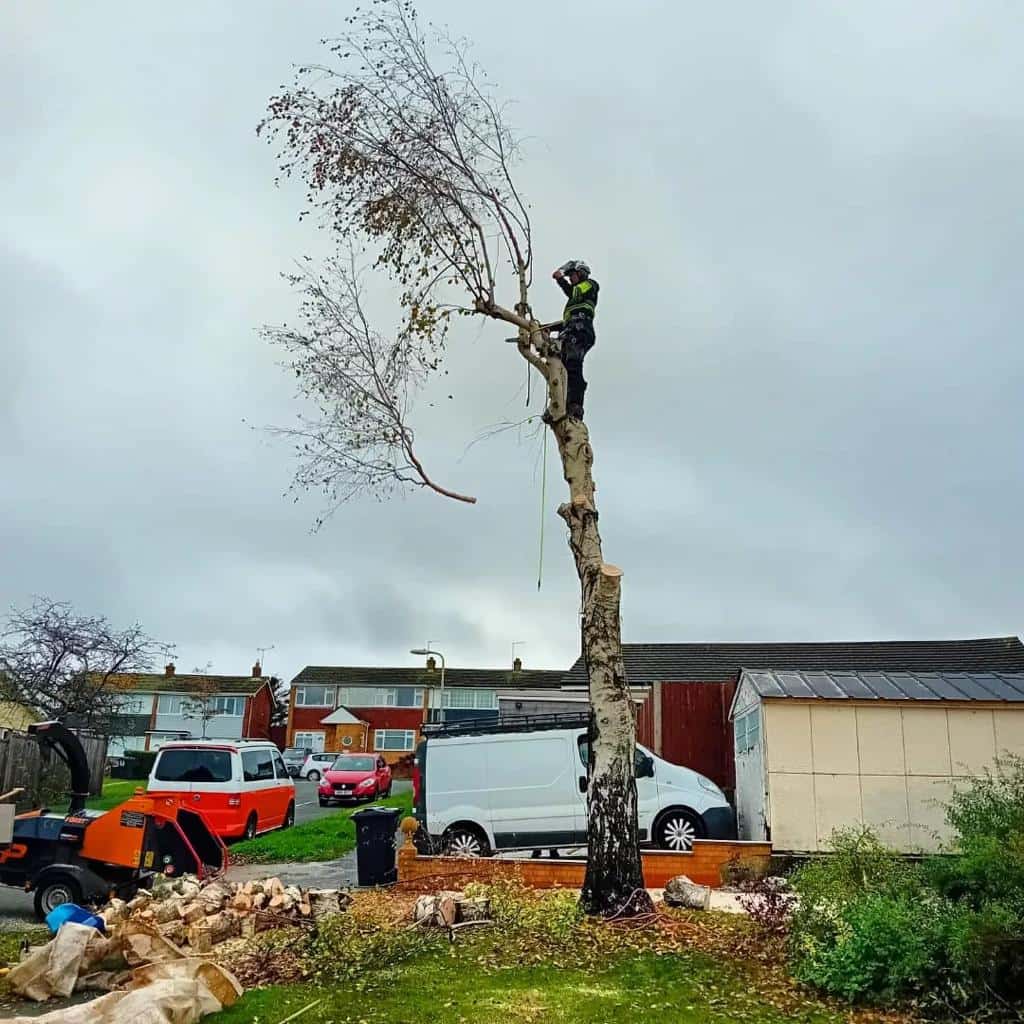
Mature trees naturally develop some dead branches over time. A small amount of deadwood is not always an indication that the entire tree is unhealthy, but larger, weakened or poorly positioned dead branches can become an important maintenance concern. Once a branch has died, it no longer has the same strength or flexibility as healthy living wood and may eventually break away.
For property owners in Portsmouth, Hampshire, professional dead wood removal can form an important part of responsible tree maintenance. At LM Tree Surgery Portsmouth, we assess trees carefully to determine whether dead branches require attention and carry out appropriate tree surgery to support safer, healthier and better-managed outdoor spaces.
What Is Dead Wood?
Dead wood refers to branches or sections of a tree that are no longer living. These branches may remain attached to the tree for some time after they have died.
Deadwood can develop for many reasons, including:
- Natural ageing
- Shading within a dense crown
- Previous branch damage
- Weather exposure
- Disease or declining tree health
- Competition between branches
Some deadwood forms naturally as a tree develops. The important question is whether its size, position or condition creates a reason for removal.
When Dead Branches Could Fall
One of the main reasons for removing deadwood is the possibility of branch failure. Dead branches gradually become drier and more brittle, potentially making them more susceptible to breaking.
The concern is particularly important where branches extend above:
- Driveways
- Garden seating areas
- Paths
- Entrances
- Sheds and other structures
- Frequently used parts of the garden
A professional tree surgeon can assess the branch and its surroundings rather than judging the need for work solely on its appearance.
After Strong Winds or Severe Weather
Periods of strong wind can reveal weaknesses within a tree that were not previously obvious. Dead or partially damaged branches may become cracked, suspended within the canopy or less securely attached.
After particularly severe weather, it can be sensible to inspect mature trees for noticeable changes.
Warning signs may include:
- Newly broken branches
- Hanging limbs
- Fresh cracks
- Branches resting on neighbouring limbs
- Changes in the shape of the crown
Where there is uncertainty, professional assessment provides a clearer understanding of the tree’s condition.
When Deadwood Is Difficult to See from Ground Level
A large tree can contain dead branches high within its canopy that are difficult to identify from below. Smaller twigs may be relatively easy to see when leaves are present, but defects affecting larger limbs can be less obvious.
Experienced tree surgeons assess the whole canopy, looking at branch condition, attachment points and the distribution of dead growth.
This is particularly valuable for mature trees where visual inspection from the garden provides only a limited view.
When Branches Are Above Buildings
Dead branches extending towards a house, garage or other structure deserve particular attention because failure could result in impact damage.
Appropriate dead wood removal can help maintain suitable clearance around:
- Roof coverings
- Gutters
- Windows
- Fencing
- Garden structures
Removing a specific dead branch can sometimes resolve the concern without unnecessarily reducing healthy parts of the tree.
Dead Wood Removal Can Improve Crown Management
Deadwood can make a tree’s crown appear untidy and may complicate future pruning. Removing appropriate dead branches gives the tree surgeon a clearer understanding of the remaining living structure.
This can be useful when planning additional work such as:
- Crown reduction
- Crown thinning
- Crown lifting
- General pruning
- Tree reshaping
Good tree surgery should be selective. The objective is not to remove branches unnecessarily but to carry out work that has a clear purpose.
Dead Branches Are Not Always a Reason to Fell a Tree
Finding deadwood within a tree does not automatically mean that the tree needs to be removed. Trees can naturally shed individual branches while remaining otherwise healthy.
The wider condition of the tree should be considered, including:
- The trunk
- Main branch unions
- Overall crown condition
- Amount and distribution of dead growth
- Surrounding environment
Where the tree remains structurally suitable, targeted maintenance may be all that is required.
When Increasing Deadwood May Indicate a Wider Problem
Although isolated dead branches can be part of normal tree development, a noticeable increase in dead growth may justify closer investigation.
If significant sections of the crown begin dying back, the cause should be assessed rather than simply removing individual branches without considering the wider tree.
An experienced tree surgeon can examine whether the deadwood is isolated or associated with broader decline.
Why Timing and Technique Matter
Removing branches correctly is an important part of professional tree care. Poorly positioned cuts can unnecessarily damage healthy tissue and affect the way the tree responds.
A professional tree surgeon considers:
- Which branches genuinely require removal
- Appropriate cutting points
- Branch size and position
- The surrounding canopy
- The tree’s overall condition
This measured approach helps retain as much healthy growth as possible.
Dead Wood Removal as Preventative Maintenance
Tree maintenance is most effective when problems are identified before they become urgent. Regular observation and appropriate professional inspections can reveal developing deadwood while it is still manageable.
Preventative maintenance can help property owners:
- Identify weakened branches earlier
- Maintain clearance around buildings
- Keep frequently used garden areas safer
- Monitor changes in mature trees
- Plan future pruning more effectively
This is particularly useful for established trees that form an important part of the garden.
Why Professional Tree Surgery Matters
Working on trees requires an understanding of branch structure, tree health and safe cutting techniques. Larger dead branches can be unpredictable because their strength may have deteriorated considerably.
Professional tree surgeons have the knowledge and specialist equipment needed to assess and remove deadwood in a controlled manner while minimising unnecessary disturbance to healthy parts of the tree and the surrounding garden.
Why Choose LM Tree Surgery Portsmouth?
At LM Tree Surgery Portsmouth, we provide professional tree surgery and ongoing tree maintenance throughout Portsmouth, Hampshire. Our approach begins with assessing the condition of the tree so that any recommended work has a clear purpose.
Whether a tree requires dead wood removal, careful pruning, crown management or more substantial attention, our experienced team focuses on appropriate tree care and skilled workmanship. We aim to retain healthy growth wherever possible while addressing branches that require professional attention.
Conclusion
Dead wood removal becomes particularly important when weakened branches are positioned above frequently used areas, buildings or other garden features, or when the amount of dead growth appears to be increasing. It can also form a valuable part of routine maintenance for mature trees, allowing potential concerns to be identified and managed before they become more significant.
Importantly, deadwood should be assessed in the context of the whole tree. Not every dead branch requires extensive intervention, and its presence does not automatically mean a tree is unhealthy or needs removing.
If you have noticed dead, broken or hanging branches on a tree at your property in Portsmouth, Hampshire, LM Tree Surgery Portsmouth can assess its condition and recommend appropriate tree maintenance. Contact our team to arrange professional tree surgery and help keep your trees carefully managed for the years ahead.
Call us on: 023 8235 3287
Click here to find out more about LM Tree Surgery Portsmouth
Click here to complete our contact form and see how we can help with your tree needs.